Oyster and Milk?
There is this myth that said oyster and milk or dairy products cannot be eaten together because it can caused chemical reaction that results in food poisoning. Some buffet restaurants even put up a sign near the oyster bar to warn people about this. Some people said that it is a mean from the restaurants to scare off people so that they would not eat so many oysters which will cause the restaurants to lose money. However, many people actually believe that it is true and these foods should not be taken together.
What is oyster?

Oyster is a kind of shellfish which live in marine habitats or brackish water. Scientific name is called Crassostrea virginice whereas the common names are called Eastern oyster or American oyster. Oyster is form reefs, provided shelter or as a habitat for many other estuarine organisms. Besides, it is a high tolerant organism because it can withstand in a wide variation of condition, such as temperature, salinity concentrations of suspended sediments and dissolved oxygen; they are not dependant on a specific environment for growth. Oyster is preserve as a food. Oyster is easily contaminated by naturally occurring bacteria which is called Vibrio vulnifiicus. This kind of bacteria is most often found in the warm waters in the Gulf of Mexico. Consuming on these bacteria will cause serious illness and death for those people with sickness such as cancer, ulcers, diabetes, liner disease or HIV infection. Food poisoning cause by contaminated oyster will results in fever, chills, diarrhea and others symptoms (Ivillage., n.d.). Although, those oyster with bacteria contaminated can be kill by cooking. Unfortunately, usually people consumed oyster in fresh and do not preheating.
The best sources of the vitamin B12 are meat and meat products. However, shellfish especially clams and oysters and also contained vitamin B12. Milk and milk products such as cheese, cottage cheese and yogurt contain less of the vitamin. The only dietary sources of vitamin B12 for humans are animal products, which have derived their cobalamins from microorganisms. All naturally occurring vitamin B12 is produced by microorganisms. Any vitamin B12 found in plant foods probably could be traced either to contamination with microorganisms contained in manure or, in the case of legumes, to the presence of nitrogen-fixing bacteria in the plant root nodules. Contaminated hands taking foods to the mouth may also provide vitamin B12.
What is dairy product?
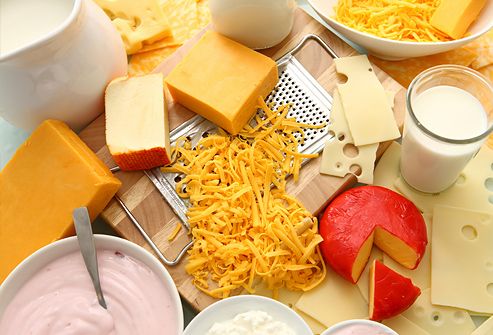
Dairy products are basically a kind of foodstuffs which are produced from milk. Usually milk is undergoes pasteurization, a process of heating the milk to kill bacteria and homogenization, a process of pressure-treating to disperse fat droplets. Mostly, dairy products are produced by addition of some harmless or beneficial bacteria and produce by the fermentation process. There are many types of dairy products, for instance cheese, yogurt, cottage cheese and sour cream. These kinds of products are produced by adding a various cultures of bacteria that will coagulate the proteins in the milk (Hoovers., n.d.). Since the main composition in dairy products is milk, therefore it will cause the most consequences.
Milk is a high nutrition food that is rich in carbohydrate primarily lactose, protein mainly in form of casein and fat. Besides, it also contains high minerals such as calcium, phosphorus, sodium, magnesium and a various type of vitamins. It is known that milk contains 80% of protein casein, but less people even know that casein is a powerful binder, it usually is a polymer used to make plastics and as a glue that used to hold beer bottle labels (Rietz., n.d.).
Vitamins and Minerals Involved
A) Folate
Good food sources of folate include mushrooms and green vegetables such as spinach, brussels sprouts, broccoli, asparagus, and turnip greens, okra, among others, as well as peanuts, legumes especially lima, pinto and kidney beans, lentils, fruits especially strawberries and oranges and their juices and liver. Raw foods typically higher in folate than cooked foods because of folate losses incurred with cooking. Fortification of flours, grains and cereals with folic acid was initiated in 1998. Thus, fortified cereals breads and grains products now represent major sources of the vitamin.
Folate in food exist primarily in the reduced form it usually contains up to nine glutamic acid residues instead of one glutamate. The principal pteroylpolyglutamates in foods are 5-methyltetrahydrofolate (THF) and 10-formyl THF, although over 150 different forms of folate have been reported. In supplements and in fortified foods, folic acid is provided as pteroylmonoglutamate, the most oxidized and stable form of the vitamin. As a supplement, folic acid is almost completely available especially if consumed on an empty stomach. When fortified foods are consumed with natural sources of folate, the vitamin is about 85% bioavailable.
Folate availability from food varies, from about 10% to 98%, because variety of factors. Variations in intestinal conditions such as pH, genetic variations in enzymatic activity needed for folate digestion, dietary constituents such as inhibitors, and food matrix, for example, influence bioavailability. Reduced forms of folate pteroylpolyglutames in foods are labile and easily oxidized. The folate in milk is bound to a high-affinity-folate-binding-protein, which appears to enhance its bioavailability. Generally, folate bioavailability from a mixed diet is thought to be about 50%. Because of the difference in defieciency of folate absorption from foods versus folic acid from supplements and fortified grain products, folate equivalents are used in recommendations for dietary folate intakes.
B) Zinc
Zinc is found in foods complexed with amino acids that are part of peptides and proteins and with nucleic acids. The zinc content of food varies widely. Very good sources of zinc are red meats especially organ meats and seafood especially oysters and molluscs. Animal products are thought to provide between 40% and 70% zinc consumed by most people. Other good animal sources of zinc include poultry, pork and dairy products. Whole grains especially bran and germ and vegetables which are leafy or at root represent good plant sources of zinc. Fruits and refined cereals are poor zinc sources. Plant sources not only have a lower zinc content, but zinc from plants is also absorbed to a lesser extent than zinc from meat.
In addition to dietary food sources, endogenous sources of zinc are provided by pancreatic and biliary secretions that are released into the gastrointestinal tract. Carboxypeptidase, for example, is a zinc metalloenzyme. Following carboxypeptidase activity, the enzyme itself is hydrolyzed and zinc is released. The released zinc is then available for absorption and reuse in the body.
- Oyster and Shellfish
One of the best sources of zinc is oyster; 100 gm of oysters contain about 25 mg zinc. Similarly, 100gm of shellfish contain 20 mg of zinc. As per the studies conducted, six medium-sized oysters included in the diet can fulfill the daily requirement of zinc.
- Dairy Products
Vegetarian people can include dairy products as a source of zinc. Yogurt is the best dairy source; consumption of 250 ml of yogurt provides 15 percent of RDA. Milk and cheese also contain high amount of zinc.
Adverse Effects of Combination of Food – Scientific basis
A) Vitamin B12 Function may be Diminished by Excessive Folate
Naturally occurring folate from foods alone appears to cause no harm. Excess folate from fortified foods or supplements, however, can reach levels that are high enough to obscure a vitamin B12 deficiency and delay diagnosis or neurological damage. For this reason, an Upper Level has been established for folate from fortified foods or supplements. The bioavailability of folate ranges from 50% for foods to 100% for supplements taken on an empty stomach. These differences in bioavailability were considered when establishing the folate RDA.
Because vitamin B12 is required to convert folate to its active form, one of the most obvious vitamin B12 deficiency symptoms is the anemia of folate deficiency. This anemia is characterized by large, immature red blood cells which indicate slow DNA synthesis and an inability to divide. When folate is trapped in its inactive methyl folate form due to vitamin B12 deficiency or is unavailable due to folate deficiency itself, DNA synthesis slows.
First to be affected in a vitamin B12 or folate deficiency is the rapidly growing blood cells. Either vitamin B12 or folate will clear up the anemia, but if folate is given when vitamin B12 is needed, the result is disastrous, devastating neurological symptoms. Vitamin B12, but not folate, maintains the sheath that surrounds and protects nerve fibers and promotes their normal growth. Folate “cures” the blood symptoms of a vitamin B12 deficiency, but cannot stop the nerve symptoms from progressing. By doing so, folate “masks” a vitamin B12 deficiency. Marginal B12 deficiency impairs performance on tests measuring intelligence, spatial ability, and short-term memory. Advanced neurological symptoms include a creeping paralysis that begins at the extremities and work inwards and up the spine. Early detection and correction are necessary to prevent permanent nerve damage and paralysis. With sufficient folate in the diet, the neurological symptoms of B12 deficiency can develop without evidence of anemia. Such interactions between folate and vitamin B12 highlight some of the safety issues surrounding the use of B12 supplements and the fortification of foods. No adverse effects have been reported for excess vitamin B12 and no Upper Level has been set.
B) Zinc Toxicity
Consumption of large amount of oysters and milk which both contained zinc will lead to zinc toxicity. The symptoms include loss of appetite, impaired immunity, low HDL, copper and iron deficiencies.
High doses, 50 milligrams of zinc may cause vomiting, diarrhea, headaches, exhaustion, and other symptoms. An Upper Level for adults was set at 40 milligrams, leads to degeneration of the heart muscle. A total of 150 milligrams of zinc can be absorbed by the people who are on zinc supplementation or using zinc lozenges to treat cold symptoms. These amounts can affects copper metabolism, depress HDL-cholesterol and also immune functions (Linus Pauling Institute, 2009).
Copper deficiency raises blood cholesterol, and damages blood vessels, raising questions about whether low dietary copper might contribute to cardiovascular disease in humans. While for iron deficiency, iron stores diminish. The second stage of iron deficiency is characterized by a decrease in transport iron, serum iron falls, and the iron- carrying protein transferrin increases which is an adaptation that enhances iron absorption. The more transferrin and the less iron in the blood, the more advanced the deficiency is. The third stage of iron deficiency occurs when lack of iron limits hemoglobin production.
Without adequate iron, energy metabolism in the cells falters. The result is fatigue, weakness, headache, apathy, pallor, and poor resistance to cold temperatures. Even at slightly lowered iron levels, energy metabolism is impaired and neurotransmitter synthesis is altered, reducing physical work capacity and mental productivity. They have no obvious deficiency symptoms, they just appear unmotivated, apathetic, and less physically fit. Work productivity and voluntary activities decline.
C) Effect of Zinc Supplementation on Calcium and Magnesium
Diminished calcium absorption has been observed with ingestion of zinc supplements when calcium intake is low which is <300mg of calcium. However, calcium absorption appears to be unaffected by zinc when calcium intake is it adequate levels.
Divalent cations, along with other minerals, can compete with calcium for intestinal absorption. For example, magnesium and calcium, both divalent cations, compete with each other for intestinal absorption whenever an excess of either is present in the gastrointestinal tract. Calcium absorption from low calcium diets that include supplements of zinc which is another divalent cations also may be impaired.
REFERENCES
An Avea Organic., n.d. The Allergy Site on Milk Allergy and Lactose Intolerance, [Online]. Available at:
Dave Rietz., n.d. Dangers of Milk and
Dairy Products - The Facts, [Online]. Available at:
Frost & Sullivan, 1994. Effect of Zinc Supplementation on Magnesium Balance [online]. Available from: http://findarticles.com/p/articles/mi_m0887/is_n10_v13/ai_15882986/ [Accessed 25 June 2009]
Harold Levine, Roee. Remington, F. Bartow Gulp., 1931. The Value of The Oyster in Nutritional Anemia, [Online]. Available at:
Hoover., n.d. Dairy Products Manufactory Industry, [Online]. Available at:
Isoldi, Kathy Keenan, 2003. Food Resource: What is the DRI/UL, function and signs of toxicity and good food sources for minerals? [online]. Available from: http://food.oregonstate.edu/faq/nutrition/nutri22.html [Accessed 24 June 2009]
Ivillage., n.d. Raw oysters: Safe for moms-to-be, [Online]. Available at:
Jane Higdon, 2003. Micronutrient Information Center - Zinc [online]. Linus Pauling Institute, Oregon State University. Available from: http://lpi.oregonstate.edu/infocenter/minerals/zinc/index.html#function [Accessed 24th June 2009]
Ningthoujam Sandhvarani, 2009. Foods High in Zinc [online]. Available from: http://www.buzzle.com/articles/foods-high-in-zinc.html [Accessed 24 June 2009]
Sareen G.S., Smith L.J., Groff L. J., 2005. Advanced Nutrition and Human Metabolism. 5th Ed. Canada: Wadsworth, Cengage Learning, pg 348,358 and 488.
South Carolina Oyster Restoration and Enhancement (SCORE)., n.d. Oyster Biology and Ecology, [Online]. Available at:
Consumers Association of Penang, 2007. Call to scrap school milk scheme [online]. Available from:http://www.consumerpenang.org/index.php?option=com_content&view=article&id=64:call-to-scrap-school-milk-scheme-parmenently&catid=41:educations&Itemid=100 [Accessed 24 June 2009]
Salishseafoods.com, n.d., Oyster myths and truths [online]. Available from: http://www.salishseafoods.com/pages/myths.html [Accessed 24 June 2009]
Trish Bales, 2009. Texas oysters – a unique holiday option [online]. Available from: http://www.texascooking.com/features/oct2004_oyster_dressing.htm [Accessed 24 June 2009]
